



Automotive Fasteners
Overview
Jieyi manufactures automotive fasteners for vehicle manufacturers and component suppliers. Our range includes automotive bolts, panel screws, rivets, pins, shafts, nuts, washers, and custom cold-forged components. We supply individual part numbers and coordinated hardware requirements for automotive production, covering both standard fasteners and components manufactured to engineering drawings.
-
![Automotive Parts Fasteners]() Automotive Parts Fasteners
Automotive Parts Fasteners cover the bolts, screws, rivets, pins and other connectors used in vehicle assembly, supplied in combination by OEM or component-factory matching needs, serving...
Read More -
![Automotive Wiper Rivet]() Automotive Wiper Rivet
The Automotive Wiper Rivet is dedicated to permanent riveting of oscillating joints such as wiper arms and wiper links; the rivet is passed through the hinge hole and upset to fix, keeping arm and...
Read More -
![Body Fasteners for Cars]() Body Fasteners for Cars
Our product are made for welding and assembly on the car body. They take on heavy vibration, moisture, and long-term wear. You can find them on door hinges, seat mounting points, seatbelt anchors,...
Read More -
![Automotive Bolts]() Automotive Bolts
Our automotive bolts are high-strength parts made for car chassis and engines. These areas face changing loads and high heat. Normal bolts break or loosen fast. Our product follow strict OEM...
Read More -
![Car Panel Screws]() Car Panel Screws
Our car panel screws are self-tapping screws made for car assembly. They cut their own thread inside metal or plastic parts. You do not need to drill a hole first. Just drive them in. This saves a...
Read More -
![Rivets On Car]() Rivets On Car
Our rivets on car are made for joining metal sheets on the car body. They connect two or more layers without welding, drilling, or tapping. The surface stays flat. And the paint is not damaged....
Read More -
![High Strength Automotive Fasteners]() High Strength Automotive Fasteners
Our high strength automotive fasteners are 10.9 and 12.9 grade bolts and screws. They go into the most critical areas of a car. Examples are connecting rods, cylinder head bolts, wheel bolts, and...
Read More -
![Cold Heading Fasteners for Auto]() Cold Heading Fasteners for Auto
Our cold heading fasteners for auto are made from cold-heading alloy steel. The material grades are ML40Cr and ML35CrMo. These have the right carbon and alloy mix for cold forming. The plastic...
Read More -
![Rust Proof Fasteners]() Rust Proof Fasteners
Our rust proof fasteners are made for wet, salty, and acidic places. They come in 304 or 316 stainless steel. 316 stainless has molybdenum added. This makes it much better against pitting...
Read More -
![Car Fasteners Fixings]() Car Fasteners Fixings
Our car fasteners fixings cover all vehicle systems. This is a general-purpose series. It includes 8.8 and 10.9 grade bolts, nuts, washers, screws, rivets, and pins. You can find our product on...
Read More





Core Advantages
Higher Tensile Capacity Within a Fixed Thread Size
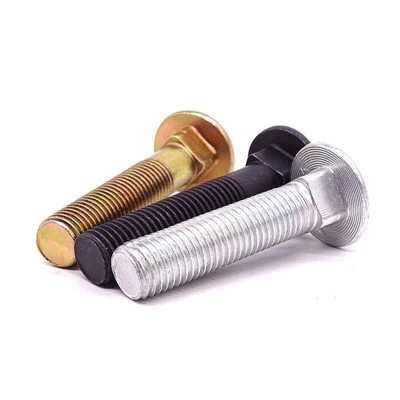
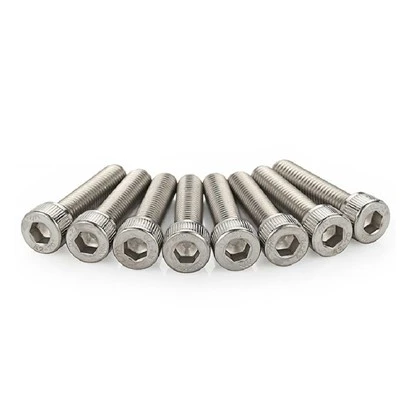
Our steel bolt range covers property classes 8.8, 10.9, and 12.9. For full-load-capacity bolts with the same thread geometry, the higher classes provide greater specified tensile load capacity without increasing the nominal thread diameter—an advantage in joint designs with limited space for larger fasteners.
Controlled Fit at Threads and Panel Holes
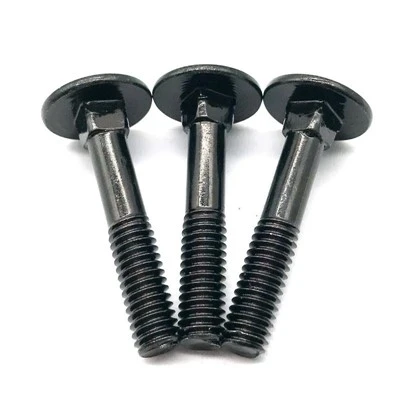
Automotive bolts with class 6g external threads provide a defined dimensional fit with mating nuts and tapped holes. Our automotive rivet series holds shank diameter to ±0.04 mm, limiting diameter variation where the rivet enters the panel hole.
Positive Stops for Assembly Positioning
Stepped rivets combine a locating diameter with a physical shoulder. The shoulder seats against the mating component to set insertion depth, allowing one part to perform both fastening and positioning functions.
Permanent Sheet Connections Without Welding Heat
Rivets secure sheet components through mechanical deformation, creating a permanent connection without melting the panel material. The joining process requires no welding heat cycle and introduces no weld heat-affected zone at the fastening point.

Customization Options
- Material Selection
- Overall Dimensions
- Shank Profile
- Head Style
- Drive Type
- Thread Specifications
- Surface Treatment
- Packaging
Why Choose Jieyi
Choose the plan that suits you best.
Established Manufacturing Since 2010
Jieyi was established in 2010. Our factory-wide production capacity reaches up to 1.5 million parts per day, covering our fastener and cold-forged component range. We serve automotive OEMs and component suppliers, with exports to Southeast Asia, the Middle East, and Europe.
01
Forming and Secondary Machining Capabilities
Our production equipment includes multi-station cold heading machines, thread rollers, CNC machining equipment, centerless grinders, and automated heat treatment. This process coverage supports formed blanks, machined features, finished shafts, and heat-treated fasteners within the same manufacturing program.
02
Inspection in Our Own Laboratory
Our laboratory performs Rockwell and micro-Vickers hardness testing, 2D optical measurement, tensile testing, and neutral salt-spray testing. These checks evaluate mechanical properties, dimensional accuracy, and coating performance against the requirements of the individual part.
03
Automotive Production Planning and Approval
We use APQP for production planning and FMEA for process risk analysis. PPAP submissions support automotive part approval, and pre-production samples are available for fit and assembly evaluation before series production.
04

Automotive Applications
- Chassis and Suspension
- Engine And Powertrain Mounting
- Body Structures And Closures
- Seating Systems
- Interior Trim
- Exterior Panels And Underbody Covers
Frequently Asked Questions
Do self-tapping screws require a pilot hole?
-
Conventional sheet-metal self-tapping screws need a prepared pilot hole. Self-drilling screws create their own hole before forming the thread.
How do I select a blind rivet’s grip range?
-
Choose a grip range covering the total joint thickness, including tolerances. Follow the rivet’s specified hole diameter and clearance requirements behind the joint.
How is tightening torque determined?
-
Torque depends on thread size, property class, clamp load, and friction. Use a setting validated for the actual joint, coating, and lubrication.
How do zinc plating and zinc-flake coating differ?
-
Zinc plating is applied electrolytically; zinc-flake coating is applied non-electrolytically. The relevant coating standards are ISO 4042 and ISO 10683, respectively.
What should a salt-spray requirement specify?
-
State the test method, duration, sample condition, and acceptance limits. For zinc coatings, distinguish white corrosion from red rust. Test hours cannot be converted directly into years of service.