Hey there! As a pin shaft supplier, I've gotten a ton of questions about the impact resistance of pin shafts. It's a super important topic, especially for folks who rely on these little components in their machinery. So, I thought I'd break it down and share what I know.
First off, let's talk about what impact resistance actually means. In simple terms, it's the ability of a pin shaft to withstand sudden forces or shocks without breaking or deforming. You can think of it like a boxer's chin - it needs to be tough enough to take a punch without going down for the count. When a pin shaft has good impact resistance, it can handle all sorts of jolts and bumps in its environment.
There are a few factors that affect the impact resistance of a pin shaft. One of the big ones is the material it's made from. Different materials have different properties, and some are just better at handling impacts than others. For example, steel is a popular choice because it's strong and can take a lot of abuse. But not all steel is created equal. High - strength alloy steels are even better for applications where impact resistance is crucial. They have a special blend of elements that make them tougher and more resilient.
Another factor is the heat treatment. Heat treating a pin shaft can change its internal structure, making it harder and more resistant to impact. It's like giving the pin shaft a workout to build up its muscles. Processes like quenching and tempering can significantly improve the impact resistance of the material.
The design of the pin shaft also plays a role. A well - designed pin shaft with the right dimensions and shape can distribute the impact forces evenly. For instance, a pin shaft with a smooth surface and proper fillets at the corners can reduce stress concentrations. Stress concentrations are like weak spots in the material, and if they're not addressed, they can cause the pin shaft to fail under impact.
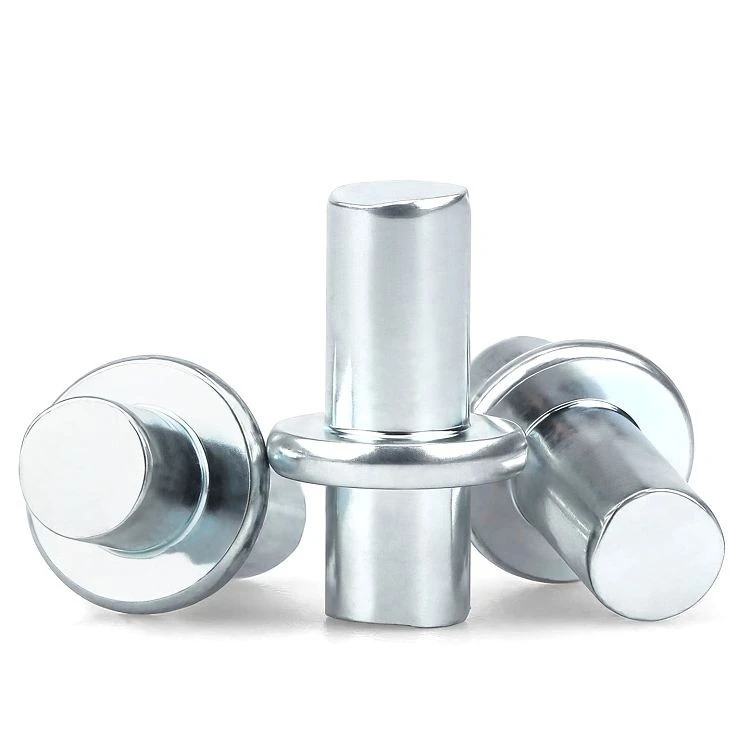
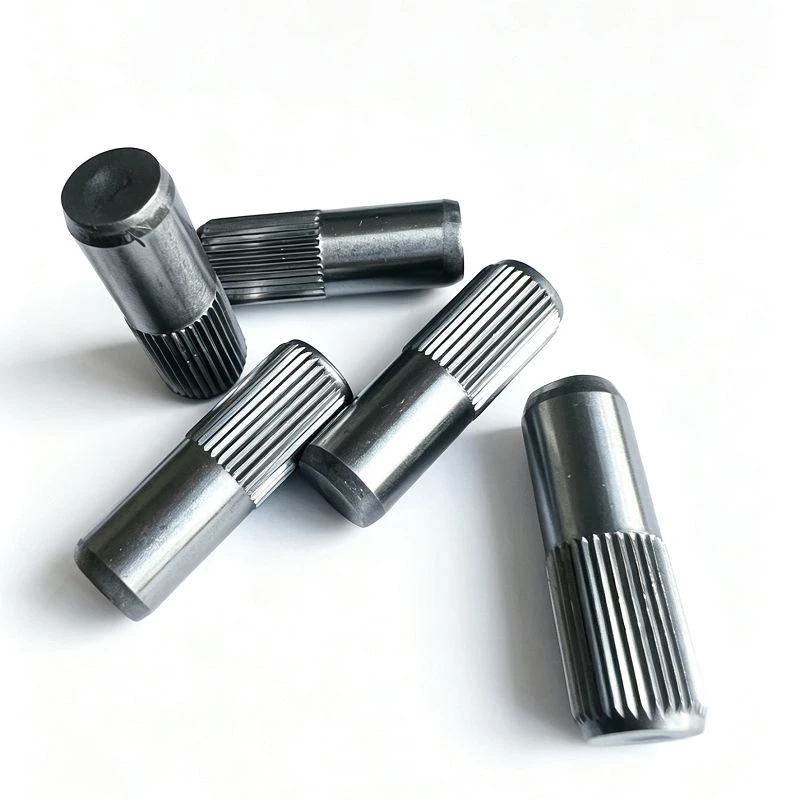
Now, let's take a look at some of the different types of pin shafts and how their impact resistance might vary.
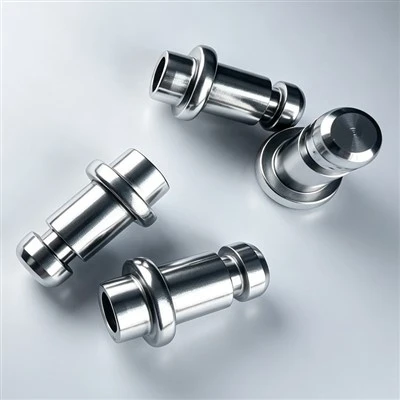
Connecting Pin: These are used to connect different parts of a machine. They often need to handle a fair amount of movement and stress. A good connecting pin should have high impact resistance to ensure that it doesn't break when there are sudden changes in load or direction.
Revolving Shafts: As the name suggests, these shafts are designed to rotate. They can be subject to dynamic forces, especially if there are any imbalances in the rotating parts. Impact resistance is important here to prevent the shaft from cracking or warping over time.
Fixed Cylindrical Pin: These pins are used for positioning and alignment. Although they might not seem like they need a high impact resistance at first glance, they can still experience shock loads if there's a sudden movement or vibration in the machinery they're part of.
Knurled Spline Rivet: Knurled spline rivets are used in applications where a secure connection is needed. They need to be able to withstand impacts to maintain their grip and ensure the integrity of the joint.
Cylindrical Pin: Cylindrical pins are simple but very versatile. They can be used in a wide range of applications, from light - duty to heavy - duty. Their impact resistance requirements depend on the specific application they're used in.
When it comes to testing the impact resistance of pin shafts, there are a few standard methods. One common test is the Charpy impact test. In this test, a notched sample of the pin shaft material is struck by a pendulum, and the energy absorbed by the material is measured. The more energy it can absorb, the better its impact resistance. Another test is the Izod impact test, which is similar but has a different sample configuration.
In the real - world, the impact resistance of a pin shaft can make or break a machine. For example, in automotive engines, connecting pins need to withstand the high - speed reciprocating motion and the sudden changes in load. If a connecting pin fails due to poor impact resistance, it can lead to a catastrophic engine failure.
In the manufacturing industry, pin shafts are used in all sorts of machinery, from conveyor belts to machine tools. In these applications, good impact resistance ensures that the machinery runs smoothly and doesn't break down frequently. It also reduces the need for costly repairs and downtime.
As a pin shaft supplier, I know how important it is to provide products with high impact resistance. That's why we carefully select the materials, use the right heat - treatment processes, and follow strict quality - control measures. We want to make sure that our pin shafts can handle whatever you throw at them.
If you're in the market for pin shafts and are concerned about impact resistance, we're here to help. We can work with you to understand your specific requirements and recommend the best type of pin shaft for your application. Whether you need a connecting pin, a revolving shaft, a fixed cylindrical pin, a knurled spline rivet, or a cylindrical pin, we've got you covered. Reach out to us for a chat, and let's figure out the perfect pin shaft solution for you.
References
- "Mechanical Engineering Design" by Joseph E. Shigley and Charles R. Mischke
- "Materials Science and Engineering: An Introduction" by William D. Callister Jr. and David G. Rethwisch