As a screw supplier, I often get asked about how different factors can affect the performance of screws. One of the key factors that many overlook is temperature. In this blog, I'll share some insights into what impact temperature can have on screws and how it might affect your projects.
How Temperature Affects the Material Properties of Screws
Let's start with the basics. Screws are made from various materials, like steel, stainless steel, brass, and aluminum. Each of these materials reacts differently to temperature changes.
Expansion and Contraction
You know how things tend to expand when they're heated and contract when they're cooled? Well, screws are no different. When a screw is exposed to high temperatures, it expands. This expansion can cause problems, especially if the screw is in a tightly - fitting hole. For example, in a machine where precision is crucial, the expanded screw might put extra stress on the surrounding parts, potentially leading to damage or misalignment over time.
On the flip side, when the temperature drops, the screw contracts. If it's part of an assembly that doesn't contract at the same rate, it can lead to loosening. Imagine a Small Tek Screws used in an outdoor structure. In cold weather, the contraction of the screw could cause the joint to become loose, which might compromise the overall stability of the structure.
Changes in Hardness and Ductility
Temperature can also change the hardness and ductility of the screw material. At high temperatures, most metals become softer and more ductile. This means that a screw might be more prone to deformation under load. For instance, a Phillips Countersunk Head Screw used in a high - temperature environment, like an engine compartment, could start to deform if the temperature gets too high. The softening of the material might cause the head of the screw to wear down or the threads to strip more easily.
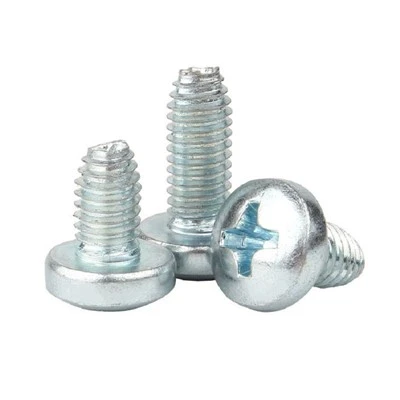
Conversely, at very low temperatures, metals can become more brittle. A brittle screw is more likely to break under stress. So, if you're using a Phil Pan Head Screw in a cold climate application, say in a freezer or in a cold - storage facility, there's a higher risk of the screw cracking or snapping when tightened or when subjected to vibrations.
Impact on Corrosion and Oxidation
Temperature plays a big role in the corrosion and oxidation processes of screws.
High - Temperature Corrosion
In high - temperature environments, the rate of corrosion can increase significantly. Oxygen in the air reacts more rapidly with the metal surface of the screw at higher temperatures. For example, steel screws can start to rust more quickly. If you're using a Combination Screw with Spring Washer in a hot and humid industrial setting, the combination of high temperature and moisture in the air can lead to accelerated rusting. This not only weakens the screw but can also cause it to seize up, making it difficult to remove or adjust later on.
Low - Temperature Oxidation
Even at low temperatures, oxidation can occur, although it's usually at a slower rate. In some cases, condensation can form on the surface of the screw when the temperature drops suddenly. This moisture can start the oxidation process, especially if the screw isn't properly coated or protected. A Seamless Screw used in an outdoor environment where the temperature fluctuates between day and night might be at risk of developing small areas of corrosion over time due to this condensation.
Effects on Screw Installation and Performance
Temperature can also have a direct impact on how you install screws and how they perform in the long run.


Installation Challenges
When it's extremely hot or cold, installing screws can become more difficult. In hot weather, the expanded screw might be harder to insert into the pre - drilled hole. You might have to use more force, which could potentially damage the screw or the surrounding material. On the other hand, in cold temperatures, the screw might be more brittle, and the risk of it breaking during installation is higher.
Performance Over Time
The performance of a screw can degrade over time due to temperature variations. For example, if a screw is constantly exposed to temperature cycles (heating and cooling), it can experience fatigue. This fatigue can lead to micro - cracks in the screw, which can eventually cause it to fail. In a building where the temperature inside and outside changes throughout the day and night, the screws used in the structure might be at risk of this type of fatigue failure.
Choosing the Right Screws for Different Temperatures
As a screw supplier, I know that choosing the right screw for the right temperature environment is crucial.
High - Temperature Applications
For high - temperature applications, you'll want to look for screws made from materials that can withstand the heat. Stainless steel is a great choice as it has good heat resistance and is less prone to corrosion at high temperatures. Some specialized alloys are also designed specifically for high - temperature use. If you're working on a project that involves high heat, like a furnace or a boiler, make sure to select the appropriate high - temperature screws to ensure long - term performance.
Low - Temperature Applications
In low - temperature applications, you need screws that are less likely to become brittle. Aluminum and some types of stainless steel are good options as they maintain their ductility at lower temperatures. Make sure to also consider the humidity levels in the environment, as this can affect the corrosion resistance of the screw.
Contact for Ideal Screw Solutions
If you're still not sure which type of screws are best for your specific temperature environment, don't hesitate to reach out. I'm always here to help you find the perfect screw for your project. Whether it's a small DIY job or a large - scale industrial project, I've got the experience and expertise to guide you. We offer a wide range of screws, including the ones mentioned above, to meet all your needs. Let's talk about your requirements and find the best solution together.
References
- Davis, J.R. (ed.). (2001). Metals Handbook: Properties and Selection: Irons, Steels, and High - Performance Alloys. ASM International.
- Underwood, G.L. (2010). Materials Science and Engineering: An Introduction. Wiley.
- Trethewey, K.R., & Chamberlain, J.C. (1995). Corrosion for Science and Engineering. Pearson Education.