In the realm of mechanical engineering, revolving shafts play a pivotal role in transmitting power and motion within various machinery. The choice of materials for these shafts is crucial, as it directly impacts the performance, durability, and efficiency of the equipment. As a leading supplier of Revolving Shafts, I have witnessed firsthand the evolution of materials used in their construction. In this blog, I will explore the emerging materials that are revolutionizing the field of revolving shafts.
Traditional Materials and Their Limitations
Historically, carbon steel has been the go-to material for revolving shafts due to its high strength, good machinability, and relatively low cost. However, it has its limitations. Carbon steel is prone to corrosion, especially in harsh environments, which can lead to a reduction in its mechanical properties and ultimately, the failure of the shaft. Additionally, its high weight can be a drawback in applications where weight reduction is a priority, such as in aerospace and automotive industries.
Alloy steels, which are carbon steels with the addition of alloying elements like chromium, nickel, and molybdenum, offer improved mechanical properties compared to carbon steels. They have higher strength, better wear resistance, and enhanced corrosion resistance. However, they are more expensive and require more complex heat treatment processes, which can increase the manufacturing cost.

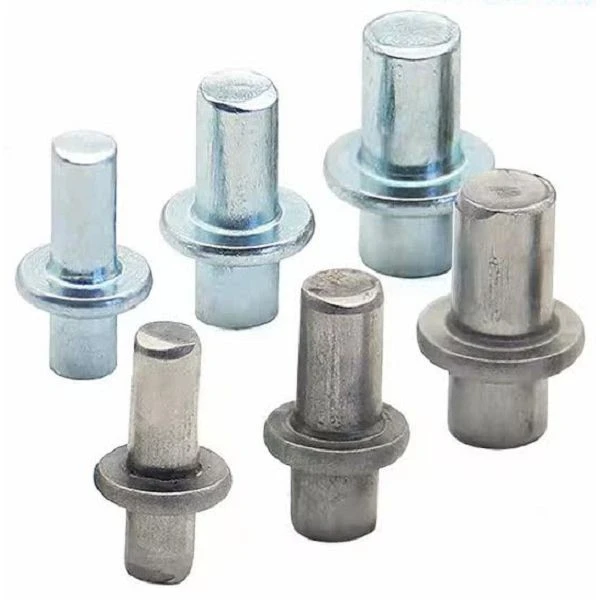
Emerging Materials for Revolving Shafts
Composite Materials
Composite materials are becoming increasingly popular in the manufacturing of revolving shafts due to their unique combination of properties. These materials are made by combining two or more different materials with distinct properties to create a new material with superior characteristics.
Fiber-reinforced polymers (FRPs) are one of the most promising composite materials for revolving shafts. FRPs consist of high-strength fibers, such as carbon fibers or glass fibers, embedded in a polymer matrix. They offer several advantages over traditional materials. Firstly, they have a high strength-to-weight ratio, which means that they can provide the same level of strength as steel shafts while being significantly lighter. This makes them ideal for applications where weight reduction is crucial, such as in high-speed rotating machinery and aerospace components.
Secondly, FRPs have excellent corrosion resistance, which eliminates the need for costly corrosion protection measures. They can withstand exposure to harsh chemicals, moisture, and extreme temperatures without degradation, making them suitable for use in a wide range of industrial environments.
Moreover, FRPs can be engineered to have tailored mechanical properties, such as stiffness and damping characteristics, by adjusting the type, volume fraction, and orientation of the fibers. This allows for the optimization of the shaft design to meet the specific requirements of different applications.
However, FRPs also have some limitations. They are relatively expensive compared to traditional materials, and their manufacturing processes can be complex and time-consuming. Additionally, they have lower fatigue resistance compared to metals, which may limit their use in applications where the shaft is subjected to high cyclic loads.
Titanium Alloys
Titanium alloys are another emerging material for revolving shafts. Titanium is a lightweight metal with excellent strength, corrosion resistance, and biocompatibility. It has a high strength-to-weight ratio, which is similar to that of FRPs, but with better fatigue resistance.
Titanium alloys offer several advantages over traditional metallic materials. They have a low density, which makes them ideal for applications where weight reduction is important. They also have excellent corrosion resistance, even in highly corrosive environments, such as seawater and chemical processing plants.
In addition, titanium alloys have good high-temperature properties, which allow them to maintain their strength and mechanical properties at elevated temperatures. This makes them suitable for use in applications where the shaft is exposed to high temperatures, such as in gas turbines and jet engines.
However, titanium alloys are more expensive than traditional steels, and their machining and fabrication processes are more challenging. They require specialized equipment and techniques, which can increase the manufacturing cost.
Ceramic Materials
Ceramic materials are also being explored as potential candidates for revolving shafts due to their unique properties. Ceramics are known for their high hardness, wear resistance, and thermal stability. They have excellent chemical resistance and can withstand high temperatures without deformation.
One of the main advantages of ceramic materials is their low friction coefficient, which can reduce energy losses and improve the efficiency of the rotating machinery. They also have good corrosion resistance, which makes them suitable for use in harsh environments.
However, ceramics are brittle materials, which means that they have low fracture toughness and are prone to cracking under impact or high-stress conditions. This limits their use in applications where the shaft is subjected to high dynamic loads. Additionally, ceramic materials are difficult to machine and fabricate, which can increase the manufacturing cost.
Applications of Emerging Materials in Revolving Shafts
The emerging materials for revolving shafts are finding applications in a wide range of industries. In the aerospace industry, the use of lightweight materials like composite materials and titanium alloys can significantly reduce the weight of aircraft components, leading to improved fuel efficiency and performance. For example, composite shafts are being used in helicopter rotor systems to reduce weight and increase vibration damping, resulting in smoother and more efficient operation.
In the automotive industry, the demand for lightweight materials is also driving the adoption of emerging materials for revolving shafts. Composite shafts can be used in driveshafts and steering columns to reduce weight and improve fuel economy. Titanium alloys are also being considered for use in high-performance engines to improve power density and thermal efficiency.
In the industrial sector, the corrosion resistance and high-temperature properties of emerging materials make them suitable for use in harsh environments. For example, ceramic shafts can be used in chemical processing plants and power generation facilities where the shaft is exposed to corrosive chemicals and high temperatures.
Conclusion
As the demand for high-performance and lightweight machinery continues to grow, the choice of materials for revolving shafts is becoming increasingly important. The emerging materials, such as composite materials, titanium alloys, and ceramic materials, offer unique properties that can meet the challenges of modern engineering applications.
While these materials have their advantages, they also have some limitations that need to be considered. The cost, manufacturing complexity, and performance characteristics of each material should be carefully evaluated to ensure that the most suitable material is selected for the specific application.
As a supplier of Revolving Shafts, I am committed to staying at the forefront of material innovation. We offer a wide range of shafts made from traditional and emerging materials to meet the diverse needs of our customers. If you are interested in learning more about our products or discussing your specific requirements, please feel free to contact us for a detailed quotation and further technical advice. We look forward to the opportunity to work with you and contribute to the success of your projects.
References
- Ashby, M. F. (2005). Materials Selection in Mechanical Design (3rd ed.). Butterworth-Heinemann.
- Callister, W. D., & Rethwisch, D. G. (2010). Materials Science and Engineering: An Introduction (8th ed.). Wiley.
- Schmid, F., & Schmauder, S. (Eds.). (2006). Materials for High-Performance Applications. Wiley-VCH.